






A glass cutter does not really cut glass. Its small wheel scores a fine line in the surface, and the glass is then snapped along that line. A straight result depends on two things: one unbroken score in a single pass, and snapping it the right way.
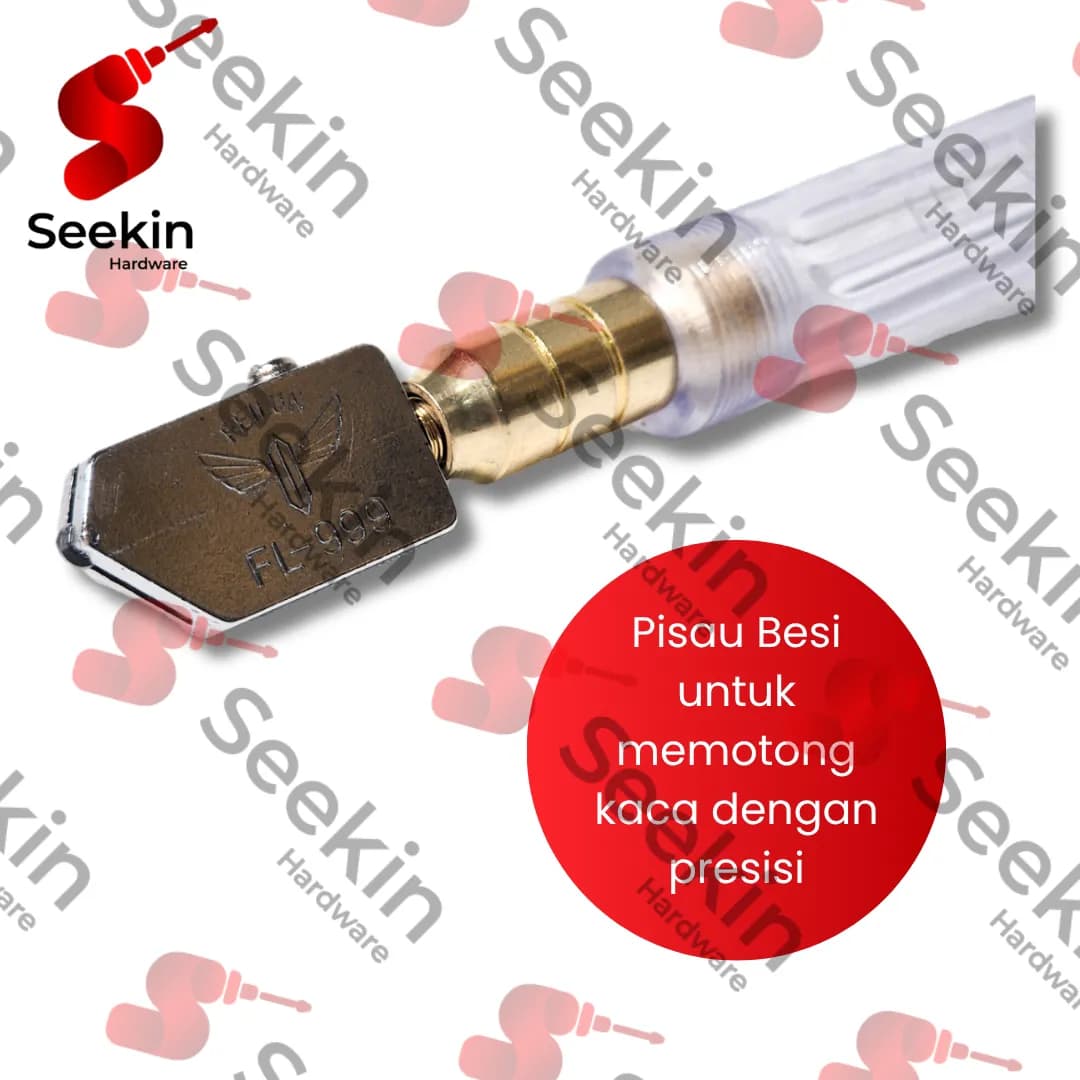
This guide uses a pencil-style cutter with an oil reservoir, such as the Feilun FL-999, which handles flat glass and mirror from 3 to 12mm thick.
What you need
- An oil-feed glass cutter.
- Glass cutting oil. Many glaziers use kerosene instead.
- A thick steel or aluminium straightedge, and a marker.
- A flat table covered with thin carpet or cloth.
- Gloves and safety glasses.
Step by step
- Fill the reservoir in the handle about two thirds with oil and close it. The oil feeds the wheel and gives a cleaner score.
- Clean the glass along the cut line. Dust and grit make the wheel skip.
- Mark the size, then set the straightedge parallel to the mark. Remember the wheel sits a few millimetres from the side of the cutter body.
- Hold the cutter nearly upright, tilted slightly toward the direction of travel.
- Score once from edge to edge with even pressure and speed. It should sound smooth and steady, like paper tearing slowly.
- Snap straight away. Put the score line exactly on the table edge and press the overhanging part, or grip the end of the line with running pliers.
- Smooth the sharp edge with wet sandpaper or a sharpening stone.
Never score the same line twice. A second pass damages the wheel and usually makes the glass break unevenly. If the first score breaks off, turn the glass and score a new line.
Glass you cannot cut
- Tempered glass. It shatters into small pieces. Cut glass before it is tempered.
- Glass thicker than the cutter is made for. For the FL-999 that is 12mm.
- Glass already cracked near the cut line.
Common mistakes
| Mistake | Result |
|---|---|
| Pressing too hard | A ragged score and chipped edges |
| Uneven pressure | A broken score, and the glass snaps off the line |
| Waiting too long to snap | The glass is harder to snap cleanly |
| Empty oil reservoir | The wheel dulls quickly and scores roughly |
| Uneven table | The glass flexes and cracks while scoring |
Looking after the cutter
- Keep the wheel cap on so the wheel does not knock against hard objects.
- Top up the oil regularly and do not leave the reservoir dry.
- Do not test the wheel on anything other than glass.
Glass and aluminium workshops buying cutters in volume can send their needs on WhatsApp.